Who will own the energy infrastructure of the next economy?
Pathfinding community ownership with Anthos. Presented by Candice Ammori, Founder of Climate Vine, at NYC Climate Week 2026.
Reach out if you'd like to support this initiative.
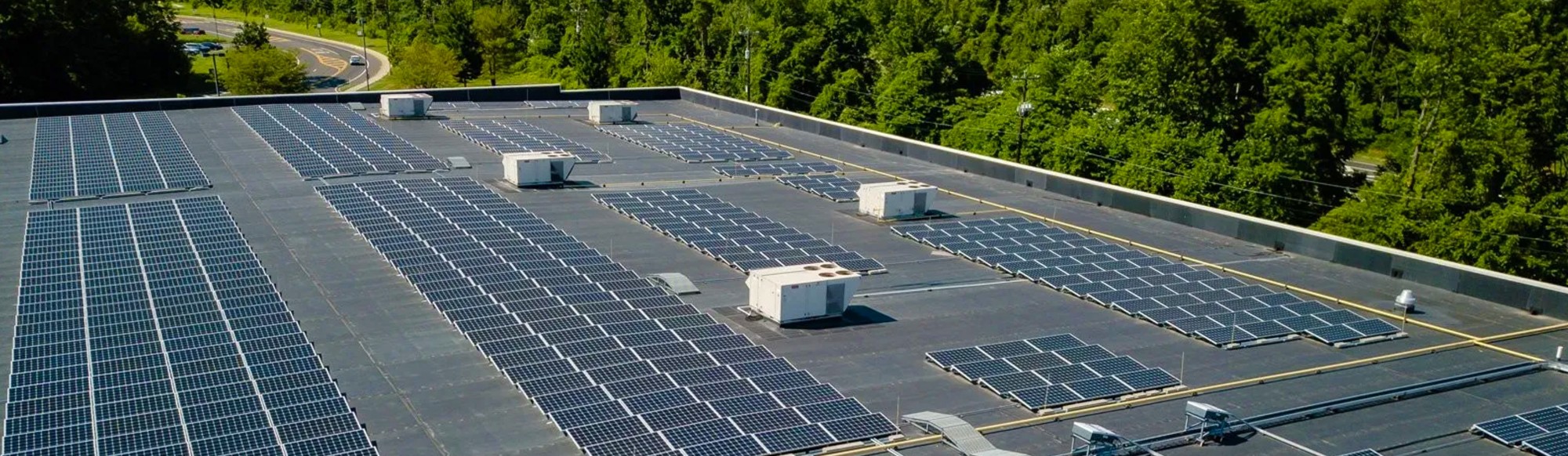
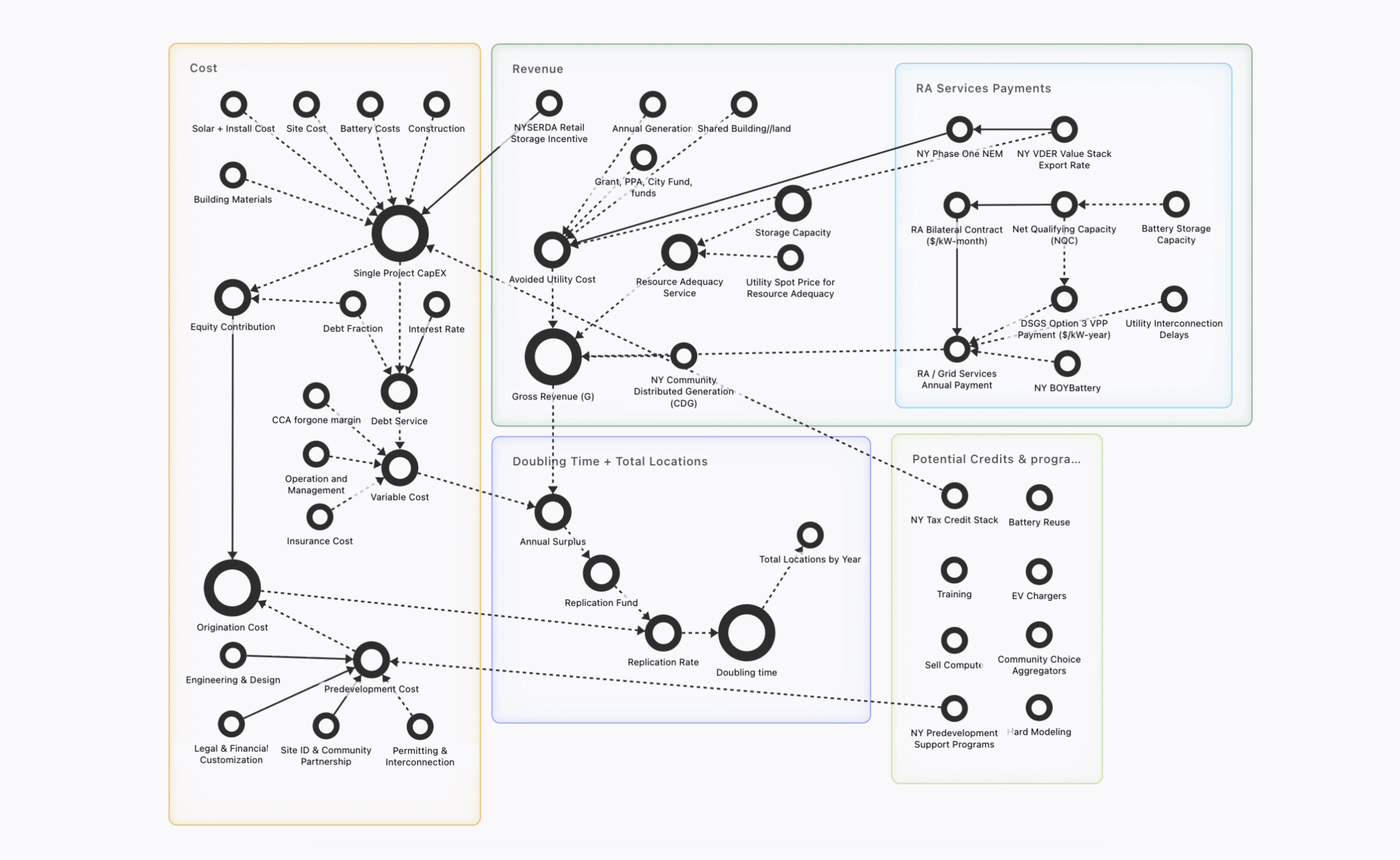
A causal model of one Community Resilience Center, a 130 kW solar and 110 kWh storage site, built as a system whose surplus funds the next site.
Electricity can now be produced almost anywhere, but laws and institutions still assume big plants and high-voltage lines. When communities own infrastructure together, resilience is distributed too.
median doubling time for the number of sites. The spread is driven by resource adequacy payments, grid-services income and pre-development cost.
median annual surplus per site, split 50% to the community partner and 50% to a locked replication fund.
to originate the next site, covering the equity gap and pre-development.
What forms of shared ownership are on the edge of buildable today?
The work started from one question: which forms of shared ownership are possible to build today, democratically governed, and replicable? The premise is simple. When communities own infrastructure together, resilience is distributed too.
Two models came out of the first round. The original model traces a single site's costs, revenues and replication. The utility model links ownership, cash reserves, cost of capital and governance to localization, resilience to shocks and productivity.
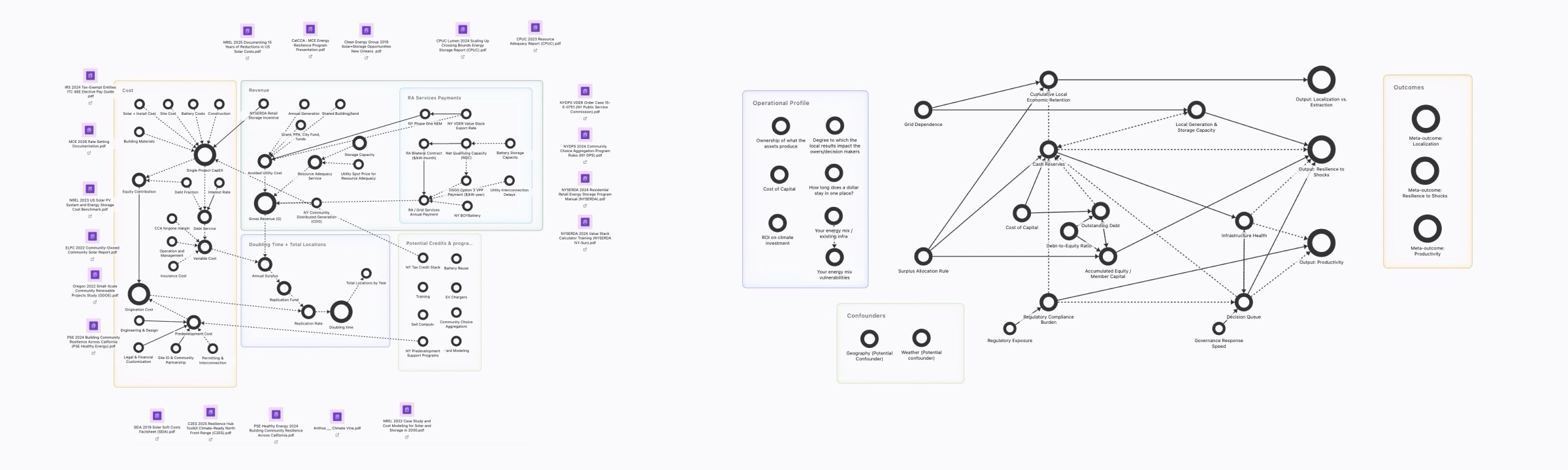
Left: the original model. Right: the utility model.
Can one Community Resilience Center create the conditions for the next one?
"I made the structural calls. Anthos built the systems math around them, with levers we can pull and timelines we can change."
One site, modeled as a system that seeds the next.
130 kW solar plus 110 kWh storage, benchmarked on the RYSE Center in Richmond, California.
Host bill offset at $0.44 per kWh, exports, resource adequacy and grid services.
About $70k to $75k median surplus: 50% to the community partner, 50% to a locked replication fund.
About $100k to $130k to originate, covering the equity gap and pre-development.
New tech, new architecture, new ownership.
Electricity can now be produced almost anywhere.
For a century, the grid meant big plants and high-voltage lines.
Laws and institutions still assume it.
What should communities own? What should a CCA own?
If this still needs capital that expects a return, are we building something different, or the status quo with a new owner?
Join a small-group session where we run the model live and you choose the levers, join the working group, or reach out about the pilot. Use the form at the top of this page.
CCA: Community Choice Aggregator. CRC: Community Resilience Center.
